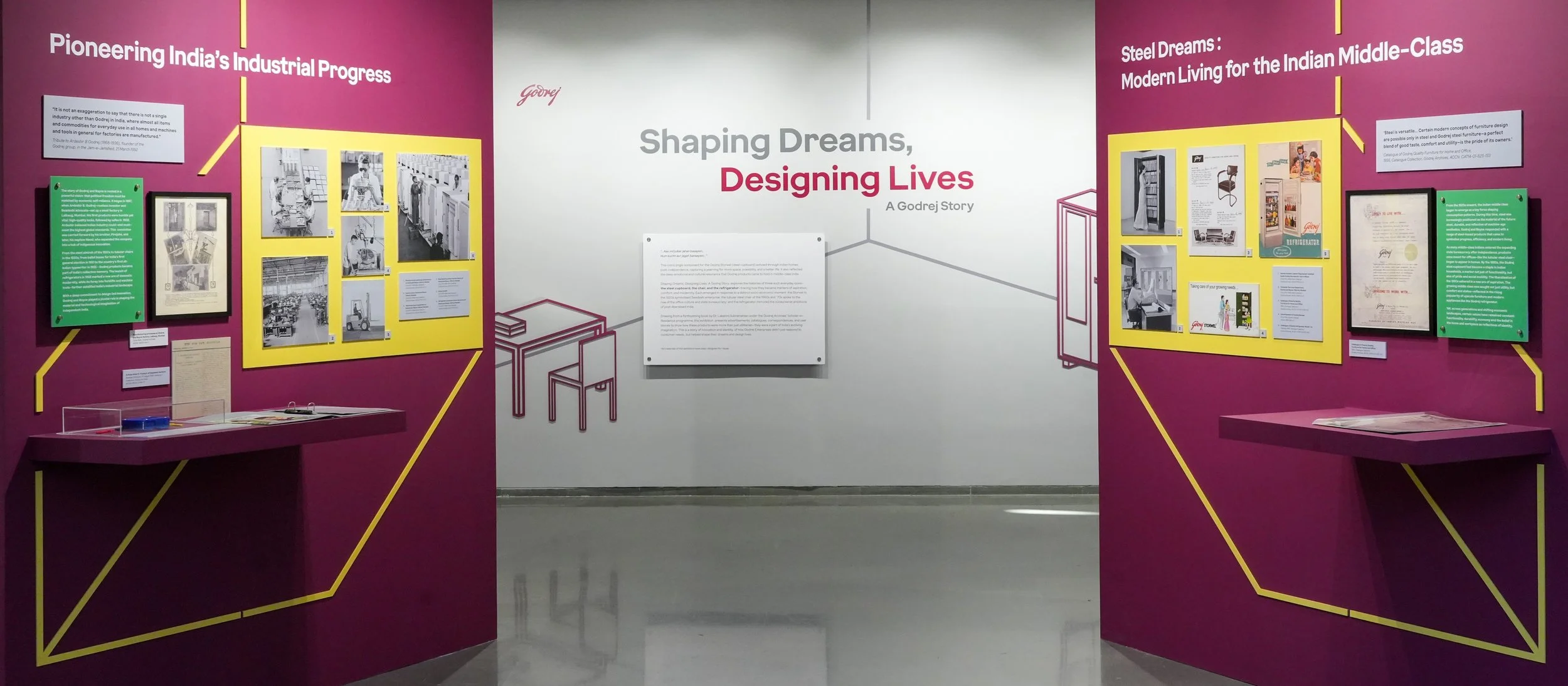
Shaping Dreams, Designing Lives:
A Godrej Story
An exhibition curation project for Godrej Archives showcasing the pioneering legacy of Godrej & Boyce and its impact on shaping everyday life in India
Client: Godrej Archives
Venue: CEPT University, Ahmedabad
Duration: 12th May 2025 to 31st August 2025
All photographs courtesy of CEPT University. All archival material courtesy of Godrej Archives. Exhibition research drawn from forthcoming work by Dr. Lakshmi Subramanian under the Godrej Archives Scholar-in-Residence programme.
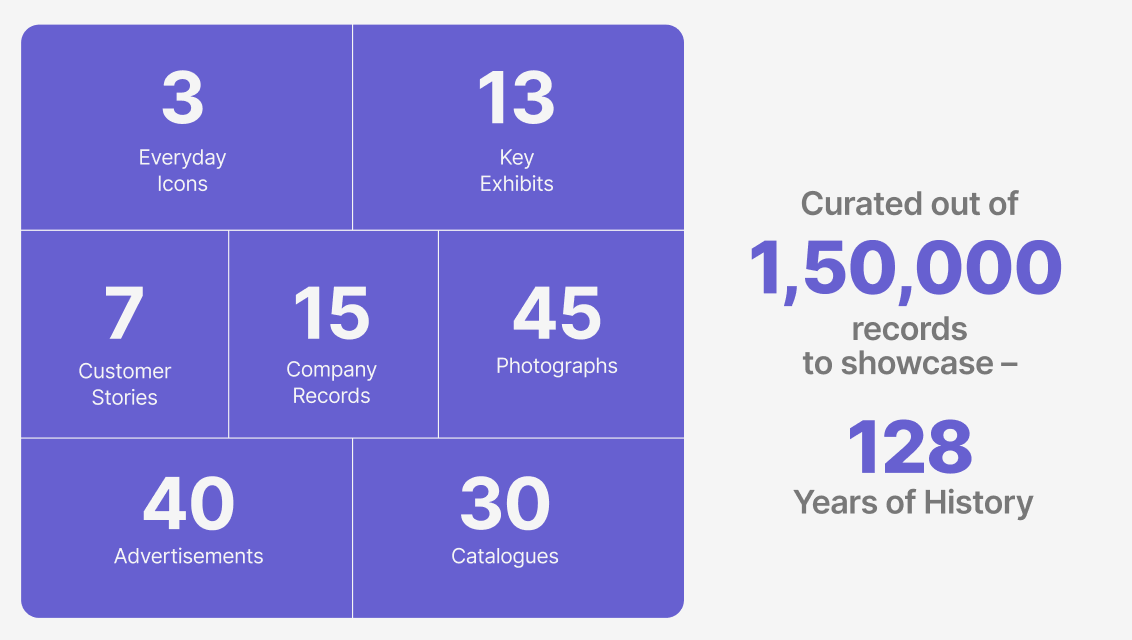
15,000+
REACH ACROSS 3 MONTHS
100+
ARCHIVAL MATERIAL DISPLAYED
3 Everyday Products
STEEL ALMIRAH, TUBULAR STEEL CHAIR, AND REFRIGERATOR
The Brief
Godrej Archives commissioned an archival exhibition drawing on Dr. Lakshmi Subramanian's forthcoming research under the Scholar-in-Residence programme — tracing how three everyday products became cultural symbols in independent India.
CONTEXT
To translate archival material — advertisements, catalogues, correspondences, user testimonials — into an immersive spatial experience that connected 21st-century visitors to the aspirations of a newly industrial India.
CURATORIAL CHALLENGE
-
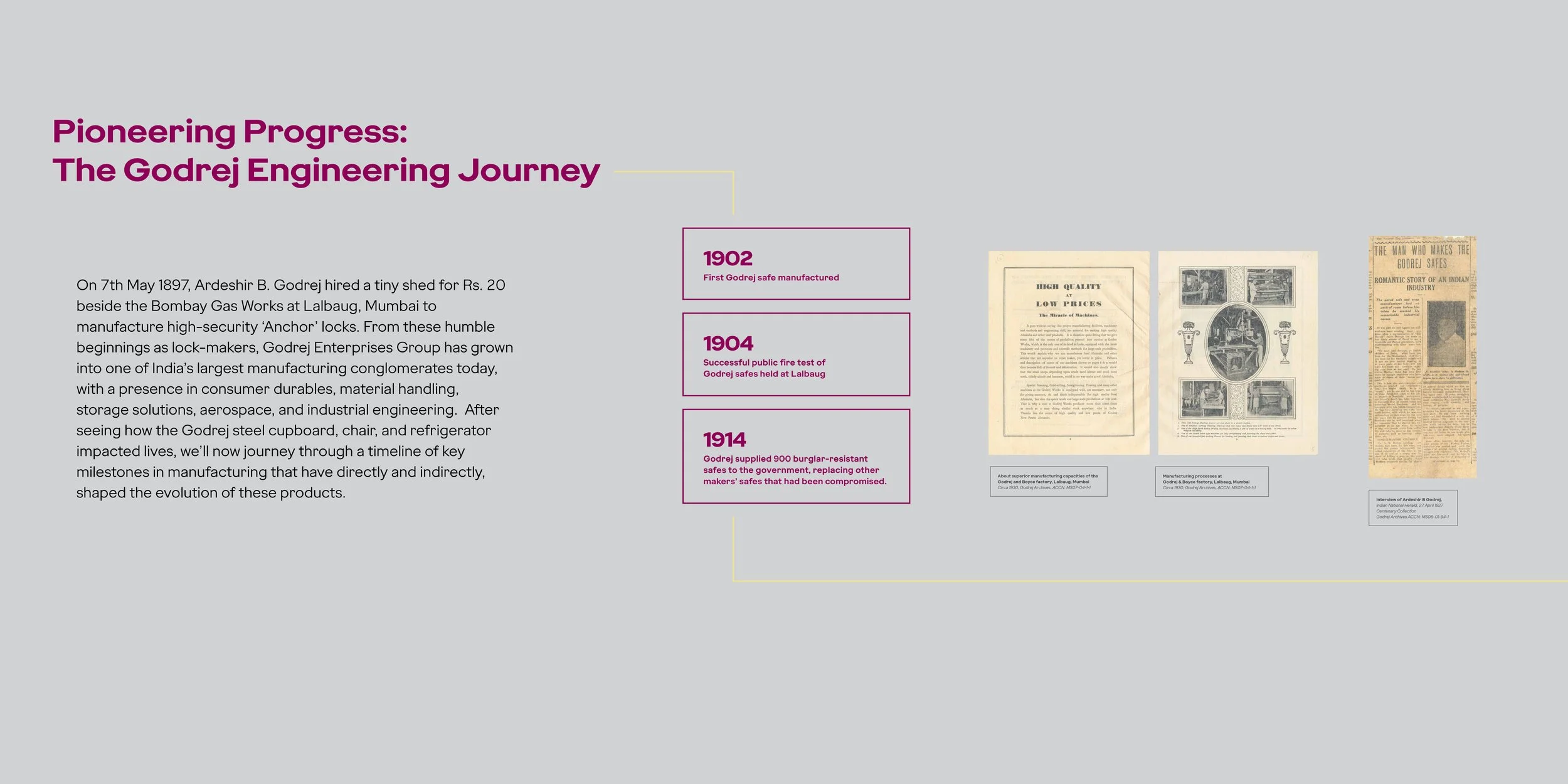
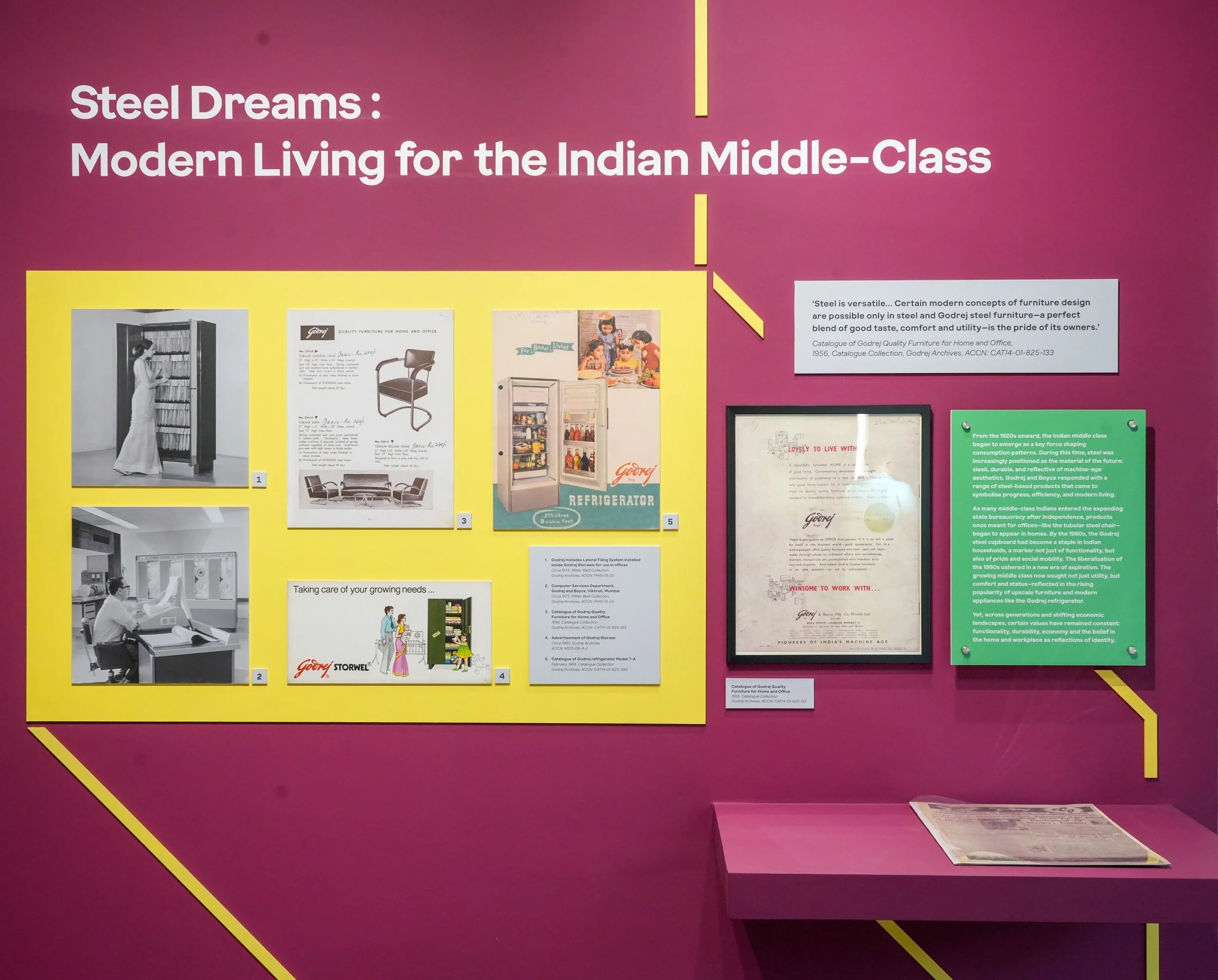
The first section traced how Godrej helped pioneer India's industrial progress, and how steel, as it became the defining material of modern living, allowed the company to develop products that carried aspirational weight for the emerging middle classes in India.
-
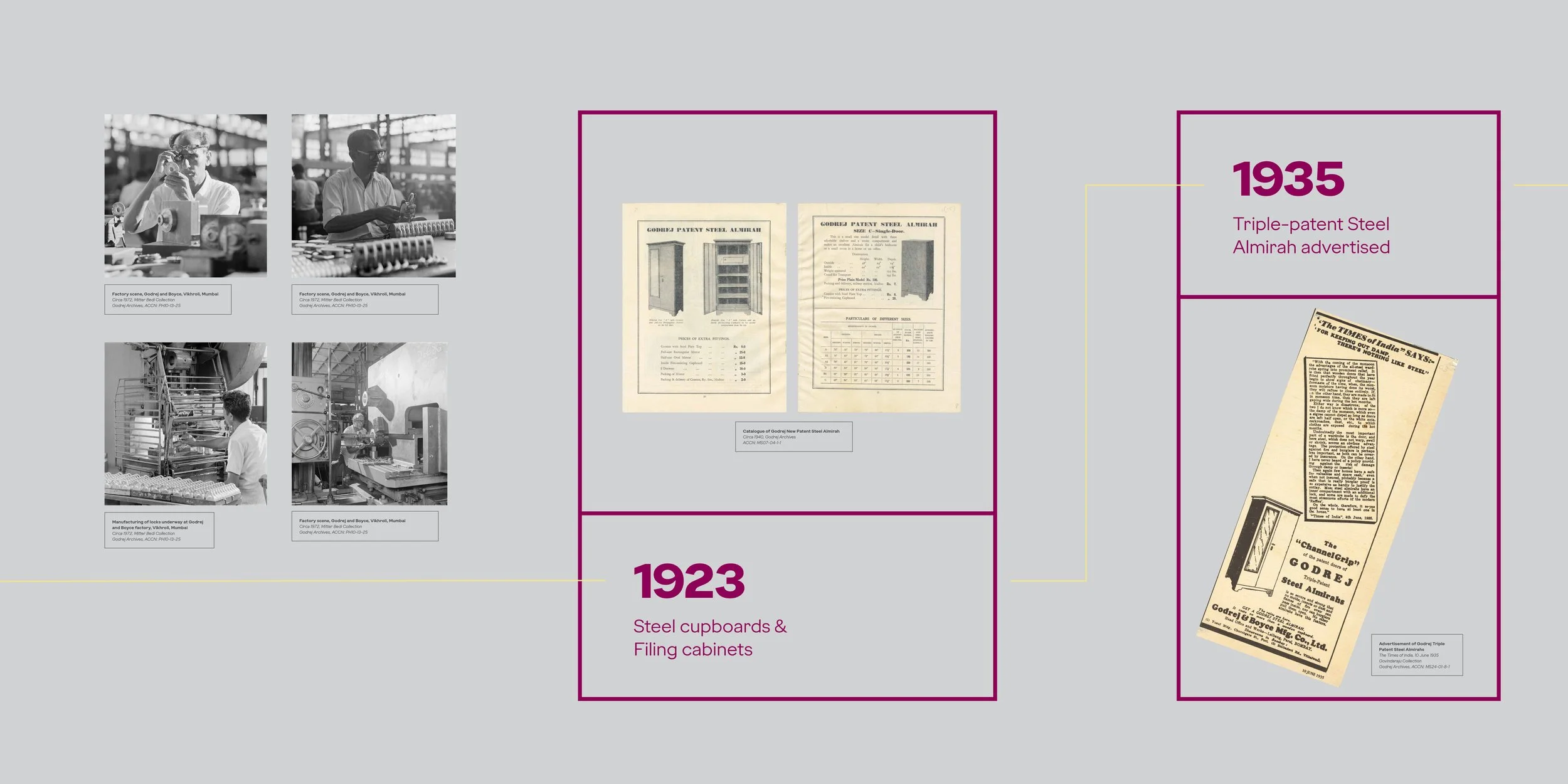
This section traced the steel almirah from its inception in 1923 through to its reinvention in post-liberalisation India, and alongside it, the refrigerator: not merely a household appliance, but a family member, a medical necessity, and a mirror of the country's changing domestic imagination.
-
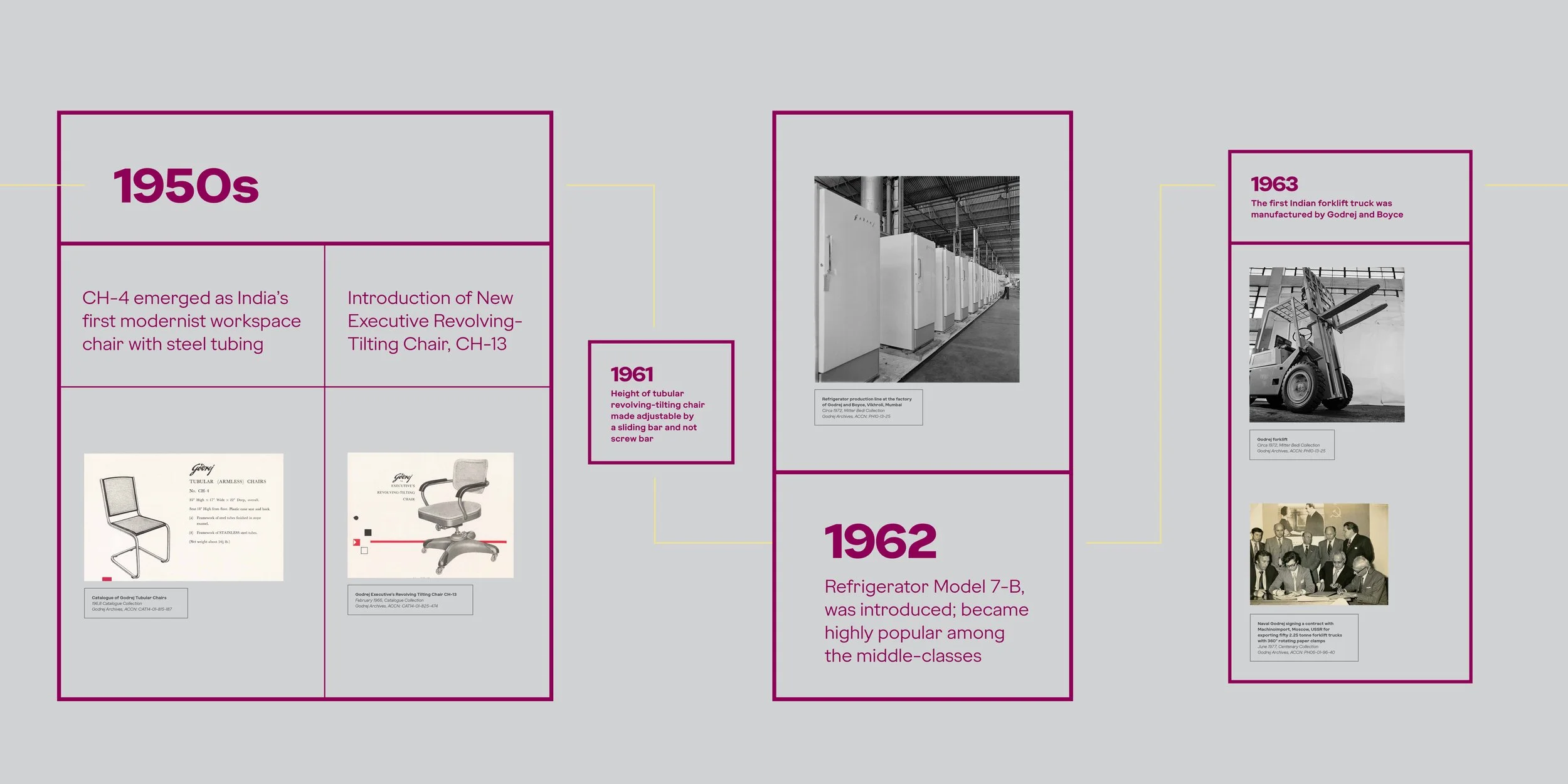
This section traced the impact of Godrej products, particularly the tubular steel chair on office spaces in post-independent India. It also showcased the partnerships that allowed the Godrej brand to succeed.
-
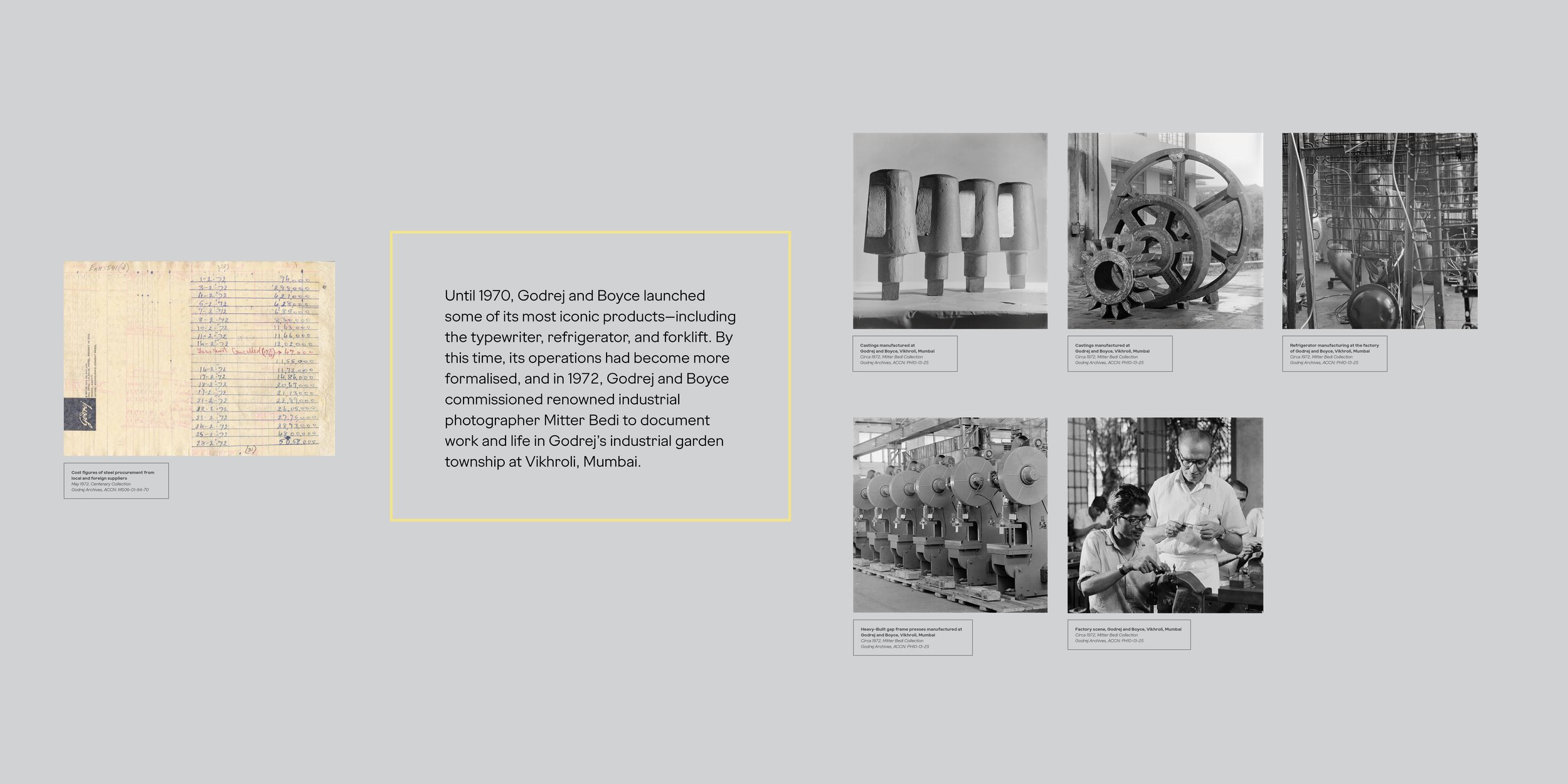
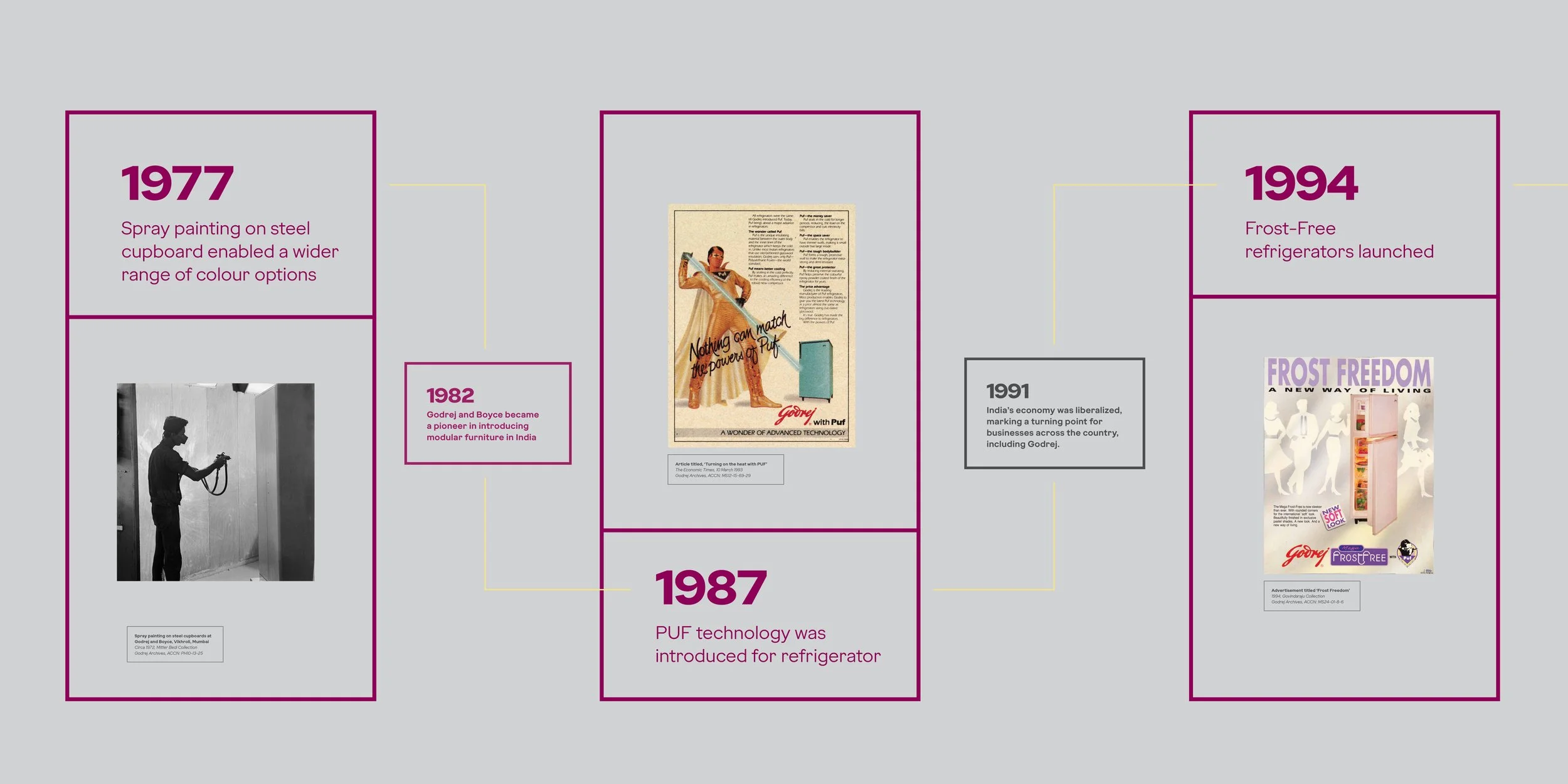
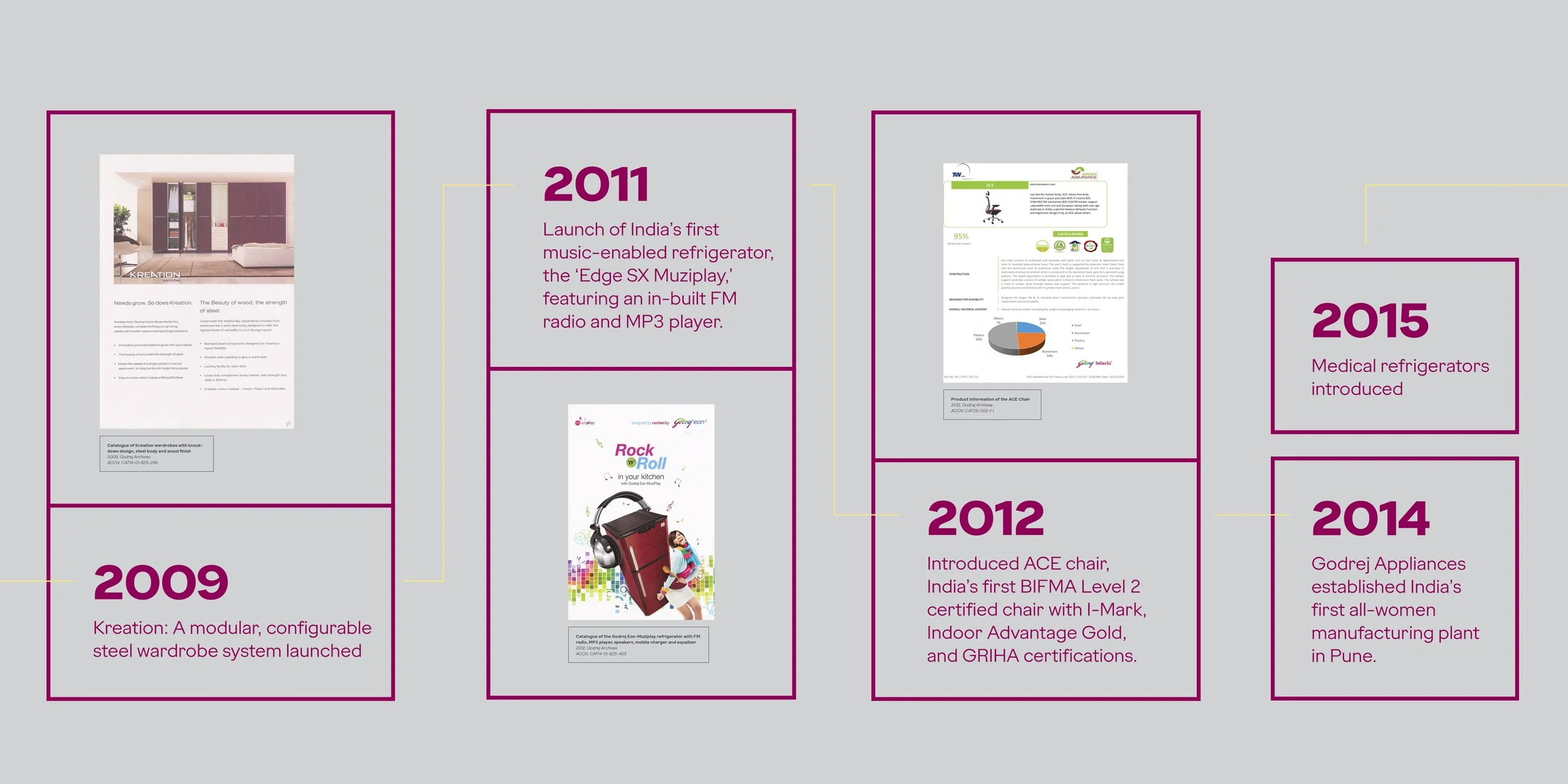
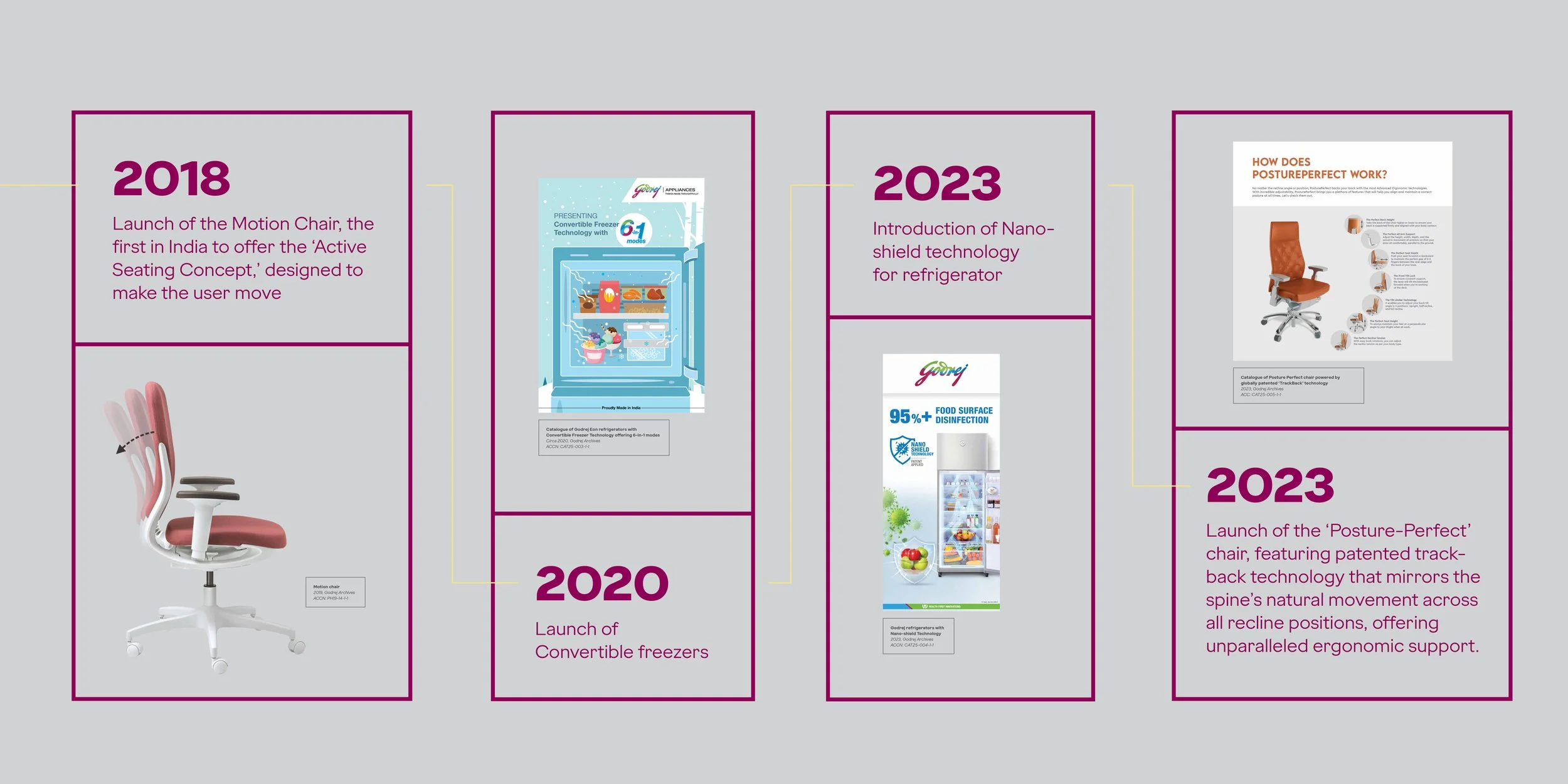
This section looked at the key engineering milestones of Godrej since its inception to today.
Key Exhibits
Setting the Context

“It is not an exaggeration to say that there is not a single industry other than Godrej in India, where almost all items and commodities for everyday use in all homes and machines and tools in general for factories are manufactured.”
— Tribute to Ardeshir B Godrej (1868-1936), founder of the Godrej group,
in the Jam-e-Jamshed, 21 March 1992
“Steel is versatile... Certain modern concepts of furniture design are possible only in steel and Godrej steel furniture—a perfect blend of good taste, comfort and utility—is the pride of its owners.”
— Catalogue of Godrej Quality Furniture for Home and Office, 1956, ACCN: CAT14-01-825-133
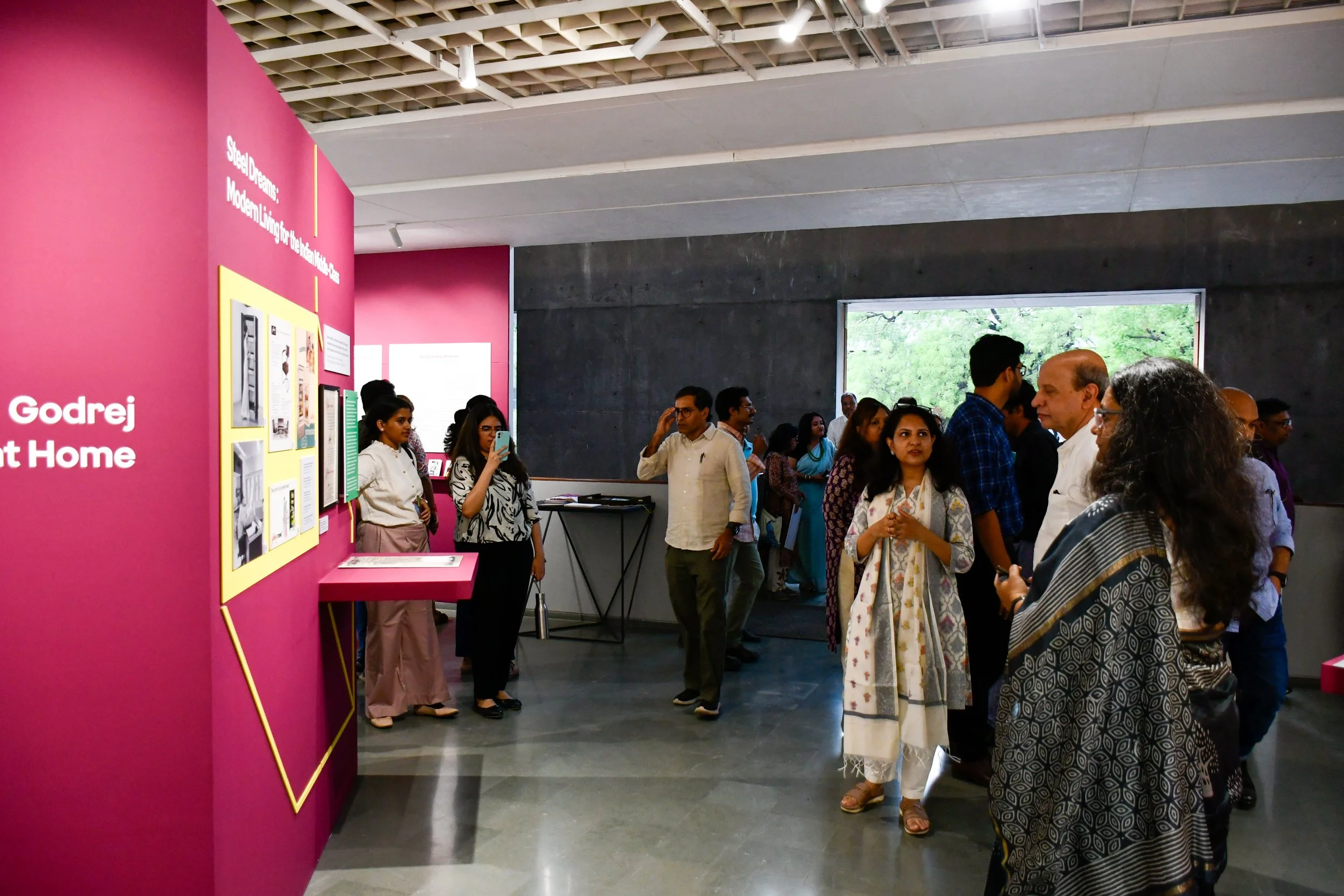
Godrej at Home
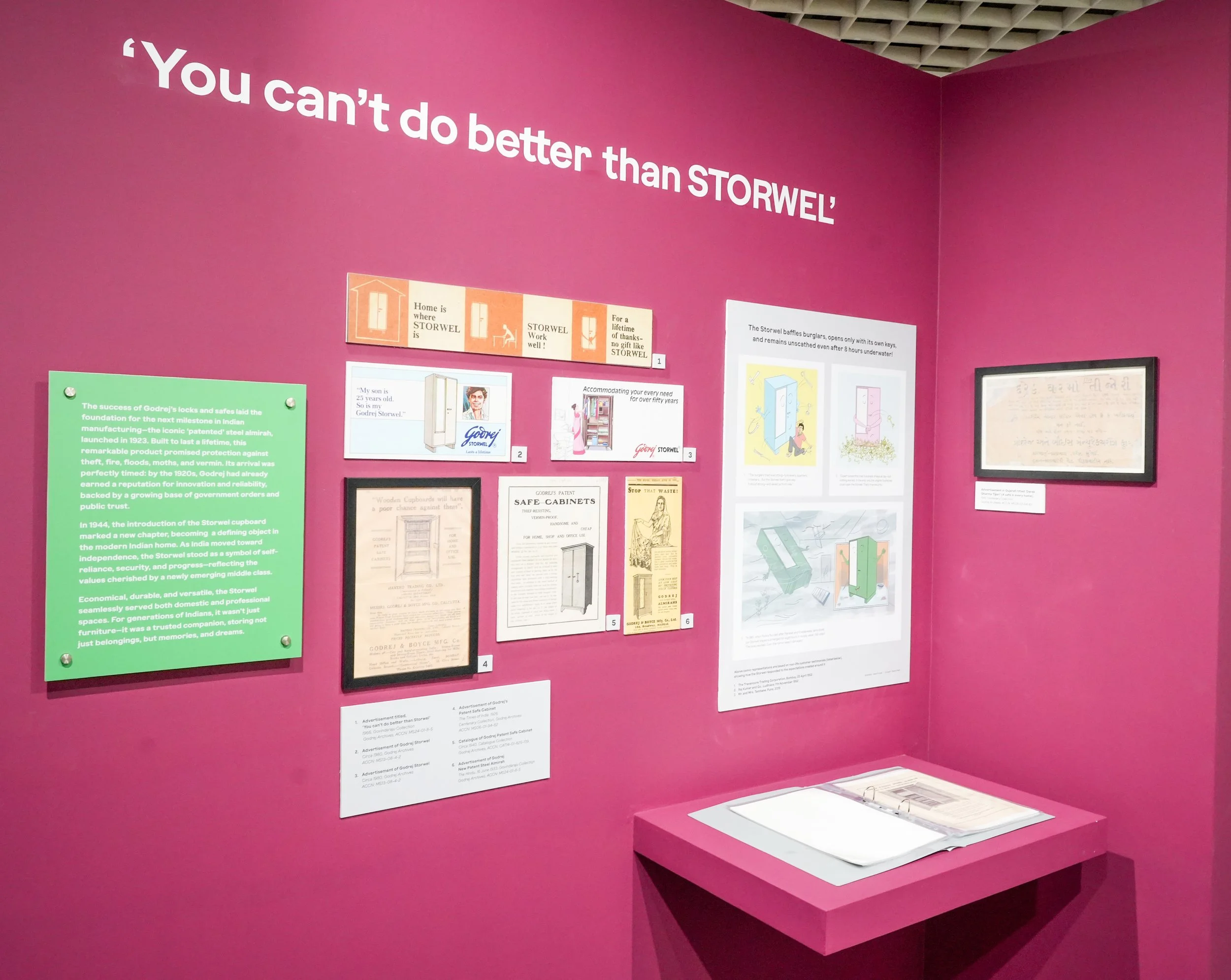
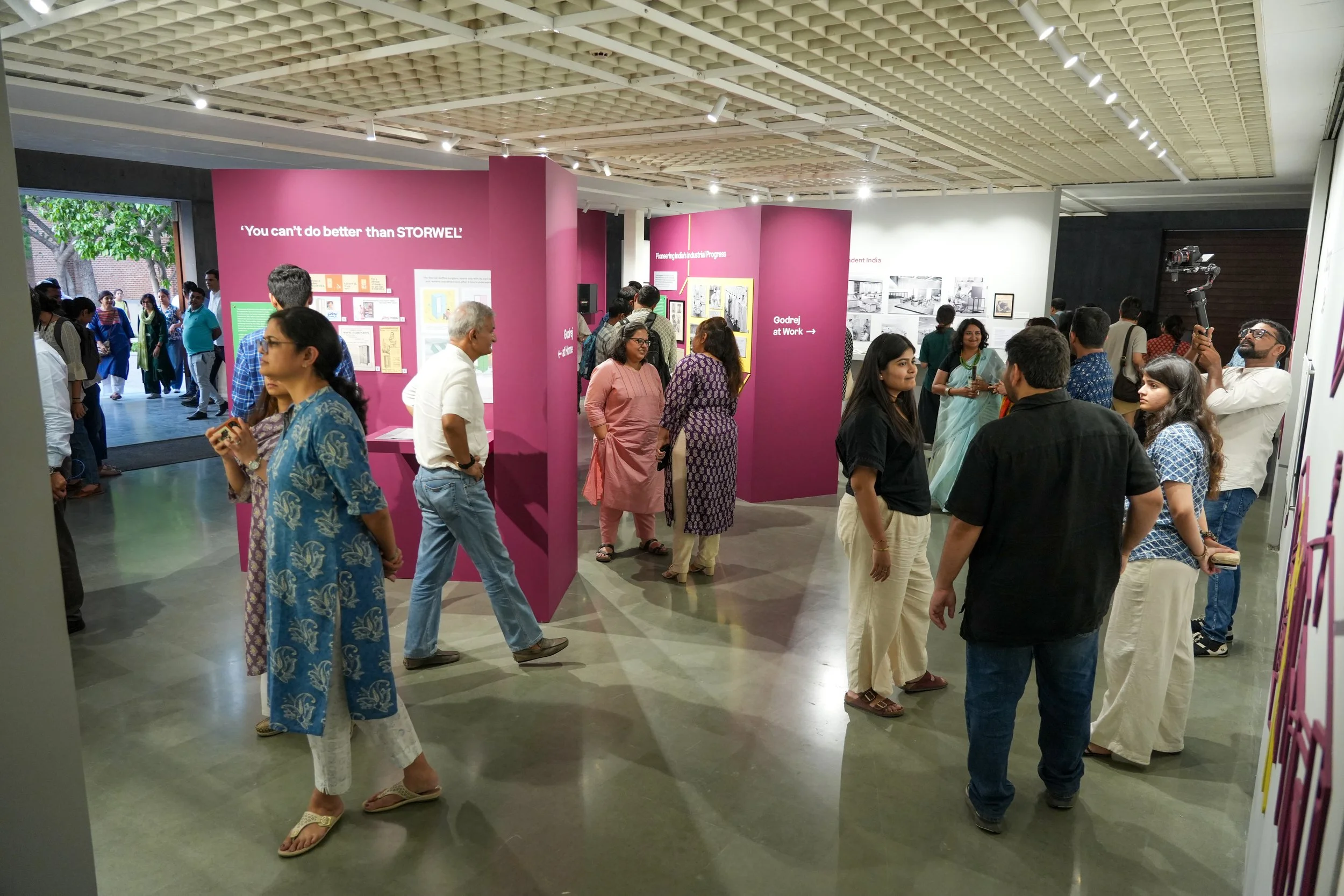
Godrej’s success with locks and safes led to a landmark in Indian manufacturing—the patented steel almirah (1923), built for lifelong protection against theft, fire, floods, moths, and vermin. By the 1940s, the Storwel cupboard became a defining object of the modern Indian home, symbolising security, self-reliance, and middle-class aspiration. This section traces almirah advertisements from the 1930s–1980s, customer testimonials that validated these promises, and a Gujarati advertisement highlighting the brand’s regional reach.
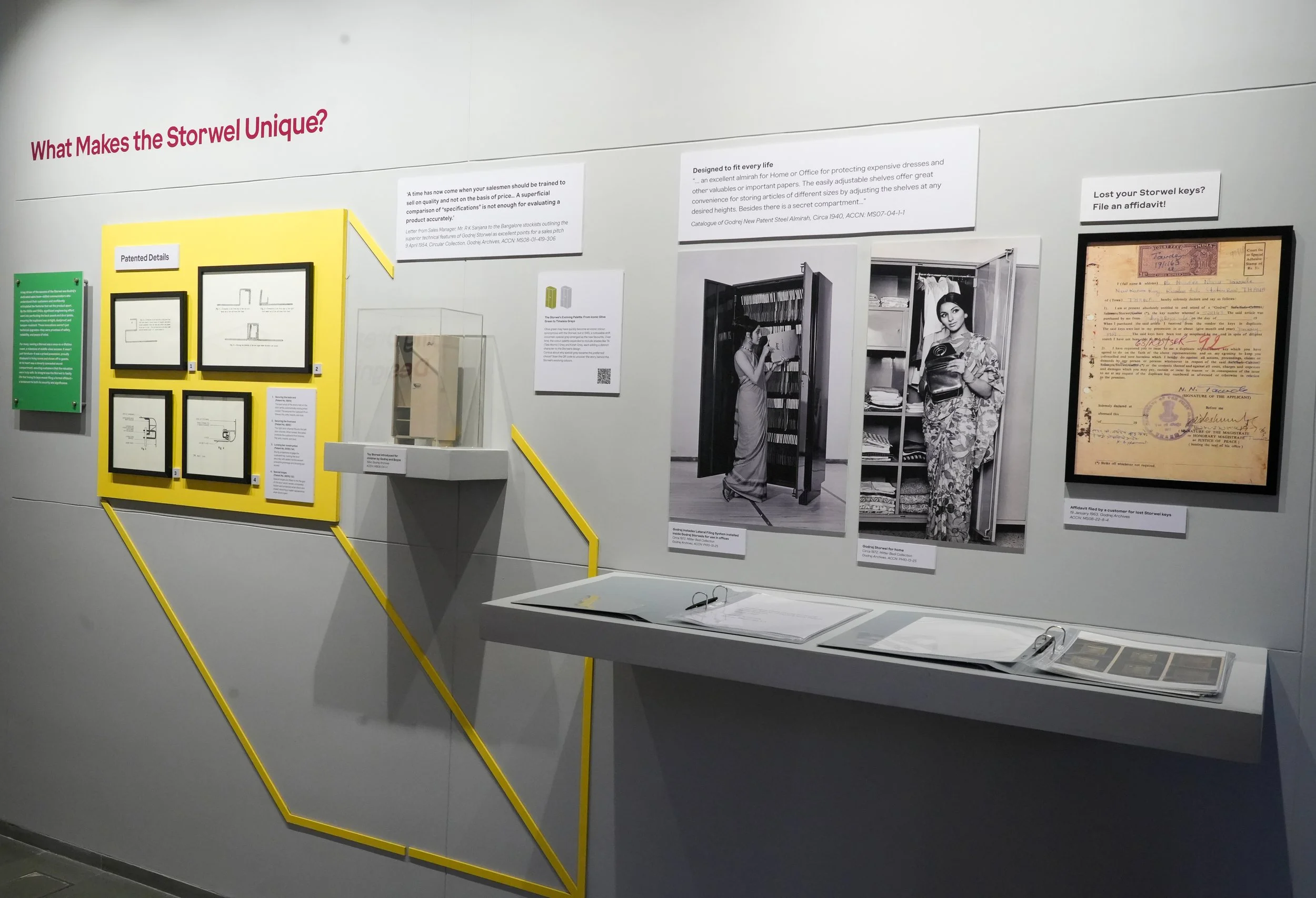
The Storwel’s success stemmed from Godrej’s skilled sales team and precise engineering, with airtight panels and tamper-resistant door jambs. More than furniture, it symbolised middle-class achievement—a prized, multifunctional piece with a secret compartment for valuables. This section highlights what made the Storwel unique: patented parts, its ability to fit ‘every life’, and a curated colour palette. So essential was it to family life that losing its keys required filing a formal affidavit, reflecting both its security and significance.
Godrej at Work
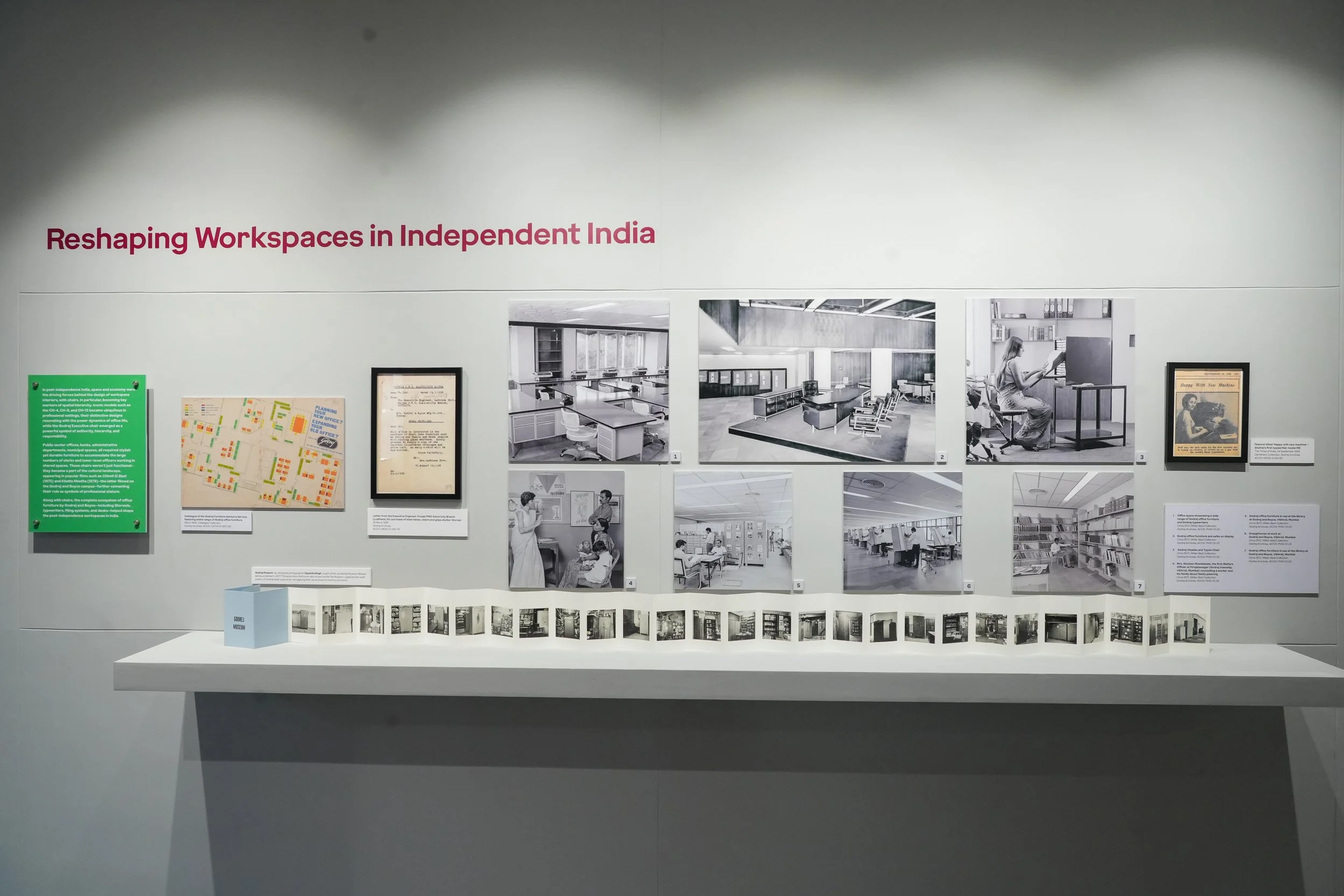
In post-independence India, efficiency and economy shaped workspace design, with chairs marking spatial hierarchy. Models such as the CH-4, CH-8, and CH-13 became ubiquitous, while the Godrej Executive chair symbolised authority and responsibility. Beyond chairs, Godrej and Boyce created a complete office ecosystem—Storwels, filing systems, desks, and typewriters—that defined modern workplaces. This section showcases the diverse spaces where Godrej furniture was used, alongside government records documenting its widespread institutional adoption.
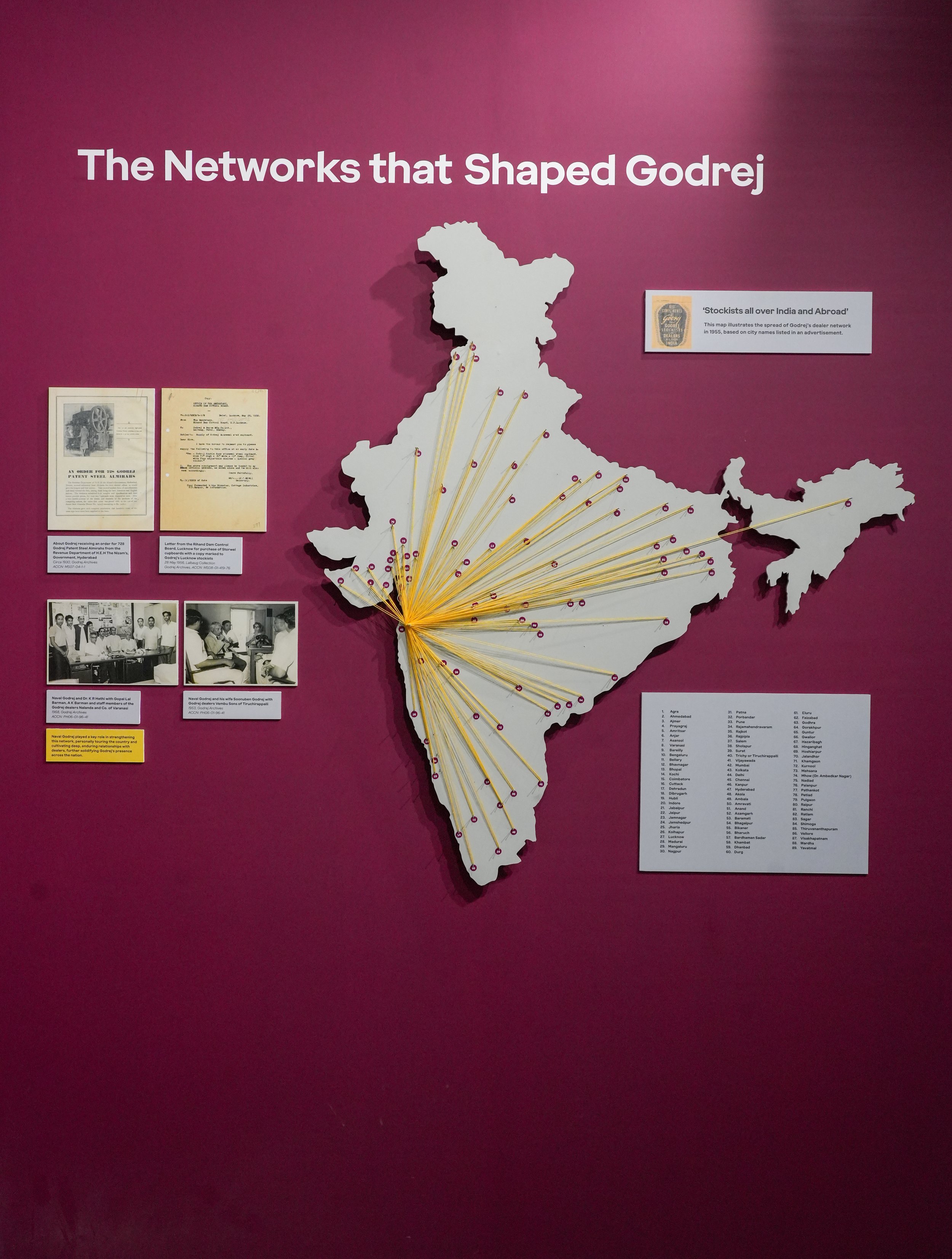
Integral to Godrej’s success was its vast network of dealers, agents, and stockists, enabling nationwide and international reach. Advertisements proudly claimed “Stockists and Dealers all over India and Abroad.” This distribution strength, combined with a reputation for quality, proved critical during the License Raj and steel shortages of the 1950s–70s. This section showcases the networks that shaped Godrej—its countrywide penetration by 1955, close dealer relationships, and sustained government demand even amid severe steel shortages.